Bonifacio 2009 – Part VII

Now, some shots from the Bonifacio citadel and the fantastic limestone cliffs.

Some descriptions from Wikipedia:

The southern coast in the vicinity of Bonifacio is an outcrop of chalk-white limetone, precipitous and sculpted into unusual shapes by the ocean. Slightly further inland the limestone adjoins the granite of which the two islands, Sardinia and Corsica, are formed. […]

The city of Bonifacio is split into two sections. The vieille ville (old town), or la Haute Ville (the Upper city), on the site of a citadel, is located on the promontory overlooking the Mediterranean Sea. The citadel was built in the 9th century with the foundation of the city. The Citadel has been reconstructed and renovated many times since its constructio and most recently was an administrative center for the French Foreign Legion. Today it is more of a museum. […]

The city and its fortifications also extend for some distance along the cliff-tops, which are at about 70 meters (230 ft) elevation. The cliffs have been undercut by the ocean so that the buildings, which have been placed on the very lip of the precipice, appear to overhang it. The appearance from the sea is of a white city gleaming in the sun and suspended over the rough waters below.


france;bonifacio;2009;

france;bonifacio;2009;cliffs;

france;bonifacio;2009;

france;bonifacio;2009;cliffs;

france;bonifacio;2009;

france;bonifacio;2009;cliffs;

france;bonifacio;2009;cliffs;

france;bonifacio;2009;cliffs;

Bonifacio 2009 – Part VI

Palombaggia!

The palette of colours you can see in Palombaggia is rare : reddish rocks, white sand, very brilliant “parasol” pins, etc… And all in front of a clear sea, from which emerge small uninhabited islands ( Cerbicale islands ).

This delightful setting ( and protected ) is not without any consequence : in summer, the tourists are taking to the beaches from the very near resort of Porto Vecchio. All the more since the road which lead to are very beautiful, and the restaurants of the beach very welcoming.

On the sand, to regain quiet, you have to walk as far as possible ( the beach is very long ) or come soon in the morning….

Two different days, with two different radiances ;-)

france;bonifacio;2009;pallombagia;

france;bonifacio;2009;pallombagia;

france;bonifacio;2009;pallombagia;

france;bonifacio;2009;pallombagia;

france;bonifacio;2009;pallombagia;

france;bonifacio;2009;pallombagia;

My Google profile

As a lot of people during the last weeks, I have created my Google profile.

What is a Google profile?

A Google profile is simply how you present yourself on Google products to other Google users. It allows you to control how you appear on Google and tell others a bit more about who you are. With a Google profile, you can easily share your web content on one central location. You can include, for example, links to your blog, online photos, and other profiles such as Facebook, LinkedIn, and more. You have control over what others see. Your profile won’t display any private information unless you’ve explicitly added it.

You can also allow people to find you more easily by enabling your profile to be searched by your name. Simply set your existing profile to show your full name publicly.

If you’ve been writing reviews on Google Maps, creating articles on Google Knol, sharing Google Reader items, or adding books to your Google Book Search library, you may already have a profile. See and customize your profile.

Quite easy. Let’s see with the time if it brings something new…

You can also find the profile of Laurent Kempé on Google profile.

LinkedIn vs. Xing

Fast comparison between LinkedIn and Xing.

Xing

  • November 1, 2003 – 5 1/2 years old
  • 7 million members
  • 26’000 groups
  • 16 languages
  • 600’000 paying members
  • 240 employees from 22 nations

LinkedIn

  • May 5, 2003 – 6 years old
  • 40 million members, thereof 10 million in Europe and 800’000 in France
  • 300’000 user groups
  • 4 languages
  • 345 employees

My LinkedIn profile (member since March 2004, i.e. more than 5 years)

My Xing profile (member since November 2005).

The Innoveo LinkedIn profile and the Innoveo Xing profile.

Cross-posted on the Innoveo Blog.

Bonifacio 2009 – Part IV

Bavella, the highlight of the Corsican mountain!

For a very good reason : from one side the mountain pass, and on the other side the forest. It summarizes itself the particularities of the island relief, with dramatic rock formation and colours from most delicate red to the darkest grey and all “sprinkled” with giant Laricio pines. The most beautiful panoramas on the Bavella Needles can be seen at the passed called Col de Bavella ( 1218m high ) inside the regional reserve.


Software maintenance

via Judith Hurwitz

Judith is bringing, as usual, interesting feeds for thoughts, this time in the field of software maintenance fees.

[…] As the world slowly moves to cloud computing for economic reasons there will be a major impact on how companies pay for software. Salesforce.com has indeed proven that companies are willing to trust their sales and customer data to a Software as a Service vendor. These customers are also willing to pay per user or per company yearly fees to rent software. Does this mean that they are no longer paying maintance fees? My answer would be no. It is all about accounting and economics. Clearly, Salesforce.com spends a lot of money adding functionality to its application and someone pays for that. So, what part of that monthly or yearly per user fee is allocated to maintaining the application? Who knows? And I am sure that it is not one of those statistics that Salesforce.com or any other Software as a Service or any Platform as a Service vendor is going to publish. Why? Because these companies don’t think of themselves as traditional software companies. They don’t expect that anyone will ever own a copy of their code.

The bottom line is that software will never be good enough to never need maintenance. Software vendors — whether they sell perpetual licenses or Software as a Service– will continue to charge for maintance. The reality is that the concrete idea of the maintenance fee will evolve over time. Customers will pay it but they probably won’t see it on their bills. Nevertheless, the impact on traditional software companies will be dramatic over time and a lot of these companies will have to rethink their strategies. Many software companies have become increasingly dependent on maintenance revenue to keep revenue growing. I think that Marc Benioff has started a conversation that will spark a debate that could have wide ranging implications for the future of not only maintenance but of what we think of as software.

Interesting!

Cross-posted on the Innoveo Blog.

Bonifacio 2009 – Part II

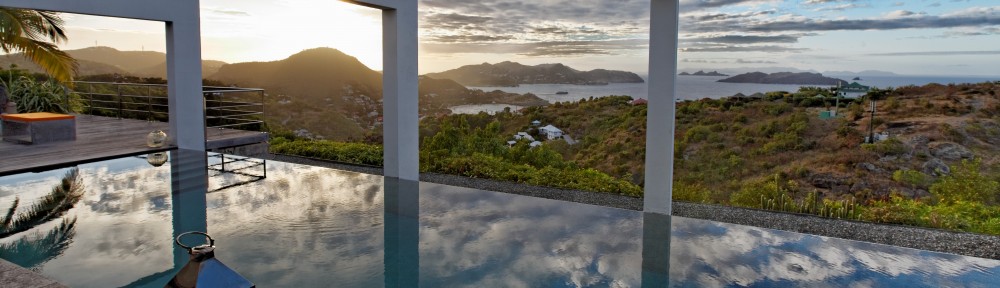
I would like to continue our trip report with the presentation of the very nice hotel we were in, A Cheda. Very nice small structure with a lot of charm. All rooms are unique and consist of an elegant mix of modern material and equipment and old stones and wood.

The restaurant is also very interesting. Good quality with a Mediterranean orientation and exciting typical Corsican menus.

The hotel is well positioned outside Bonifacio, but not so far. All around, a marvelous garden with beautiful (old) trees.

On top, a very cool but professional welcome. Nice dedicated people who are delivering good services for this 4* hotel.

Very warm recommendation from the whole family for this very good hotel!

france bonifacio 2009   a cheda

france bonifacio 2009   a cheda

france bonifacio 2009   a cheda

france bonifacio 2009   a cheda

france bonifacio 2009   a cheda