
PICTURES: Sweden’s Twisting Tower

Twisting Tower[via CNN.com]

Wow, original and very nice!

With its spectacular 90-degree twist, Turning Torso consists of nine stacked cubes, each turned slightly.

The bottom three cubes will be office space and the top six contain 147 luxury apartments. Many residents, who are expected to move to the rented apartments in November, will have a view overlooking either the flat farmland of Skane, Sweden’s southernmost province, or the Oresund strait and Denmark.

[…] The HSB housing cooperative that built the skyscraper originally planned condominiums only, but decided to rent the apartments because of the high costs. The most expensive apartment will be rented for about euro3,000 ($3,700) a month.

BLOG: blogkomm v2.3

captchaI have finished to install and to configure the last version of blogkomm (v2.3) developped by Holger Kreis. Thanks a *lot* to Holger for this new release, which contains a captcha-feature (see Wikipedia). That was really necessary for me because I was confronted with a new wave of spams since some days (yesterday, over 100 comment-spam….), although, again, there is *no* chance that a comment-spam appears on this blog because of the moderation.

blogkomm integrates the reader’s comments into your blog without any pop-ups. Besides this you have different features coming along with that, like

  • different notification services
  • preview feature
  • user remember feature
  • quick-Editing admin-tool
  • recent comment-list
  • multilingual interface
  • a setup and configuration tool
  • comments moderation
  • captchas for spam protection (Version 2.3)
  • gravatar-feature included

BUSINESS: About Open Source Business Model

[via Jeff and Business Week]

Most business models rely on giving the software away over the Web, then either charging for a souped-up version of the program or for training, maintenance, and support.

But revenue continues to be a problem. While open-source companies trumpet hundreds of thousands of downloads, on average just about 2% of those customers are actually paying any money. After all, just because every piece of software companies rely on to run their businesses can be replicated with open-source alternatives, that doesn’t mean there’s a market for it, caution analysts.

The upside is that many more companies will try open-source software because it’s free. The viral nature of the Web and the open-source community means companies don’t need a costly sales organization. Instead of hiring expensive, experienced salespeople and investing a lot of money and time in closing deals with skeptical CIOs, open-source companies just put their code online. Developers within companies often download the software for a test drive. Word of mouth spreads the news. Before long, young companies such as SugarCRM and JasperSoft are getting tens of thousands downloads a day, without spending a dime on sales calls.

NEWS: Microsoft and Open Source

[via O’Reilly]

Sometimes, it is good to bring this kind of discussion down to earth.

While many people see Microsoft as the “enemy” of open source, Microsoft has in fact been busy learning from open source, and has released source code for more than eighty Microsoft projects under a “shared source” license. In addition, there are about six hundred programs (notably dotNetNuke) released by independent developers under Microsoft shared source licenses. As in the open source world, many of these projects have ended up with small license variations, creating unnecessary complexity.

[…] Based on a quick read, the non-limited versions of these licenses look like they might well be able to meet with OSI approval as open source licenses. I’d urge Microsoft to go ahead and to go ahead and submit them to License-Discuss for OSI Approval, and become a full-fledged member of the open source community.

GADGET: Big screens, HP L2035

[via Jeremy & New York Times]

It seems that there is a “scientific” justification to buy big screens.

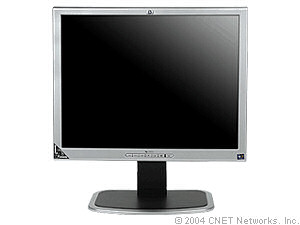
HP L2035

The results? On the bigger screen, people completed the tasks at least 10 percent more quickly – and some as much as 44 percent more quickly. They were also more likely to remember the seven-digit number, which showed that the multitasking was clearly less taxing on their brains. Some of the volunteers were so enthralled with the huge screen that they begged to take it home. In two decades of research, Czerwinski had never seen a single tweak to a computer system so significantly improve a user’s productivity. The clearer your screen, she found, the calmer your mind.

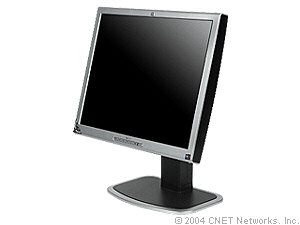
HP L2035

I totally agree :-) I am using for a while now (some months) an HP L2035 20.1-inch LCD at home and in my office. Quite a great LCD, nice quality, excellent contrast, sharp rendering, with an interesting smooth landscape-portrait pivot system.
The HP L2035 is coming with DVI-D, DVI-A, VGA and S-Video inputs. Resolution is 1600×1200, 16ms pixel-response time, contrast ratio 500:1, max. vertical and horizontal view angle: 170°, 3-years guarantee.

Have a look at the cnet review.

NEWS: Optimism is hard

[via Seth]

I like this one very much: Optimism is hard. But it’s usually worth it.
Seth gives us some precise examples. Hard to believe but simply the “brutal facts”.

Today’s Globe & Mail reports that over teh last 12 years, the number of armed conflicts in the world has gone down by 40% and the number of extremely deadly conflicts (more than 1,000 battle-related deaths) is down by more than 80%.

A different source reports that New York is the safest large city in the US, with serious crime continuing to drop.

And it’s much harder to get sick from bad sushi, too. (has to do with aggressive refrigeration.)

NEWS: About innovation and web 2.0

[via Jeff]

Forget the innovator’s dilemna principle in the Web 2.0 world: established players (Google, Yahoo, Microsoft & al) are bringing in talents by hiring them away or acquiring their companies, and are playing catch up on new features and services at an unprecedented pace. The initial versions of what they produce are not always great and don’t really match startup products or services, but in a relatively short order, they get closer and closer. And since the “elephants in the room” know one thing – scale, they can intercept startups when these start facing scalability issues and their initial architecture can’t cope with their success.